|
(c) Pocumtuck Valley Memorial Association, Deerfield MA. All rights reserved.
Working : "Where art and strength combine"
|
|
The American Revolution ushered in new beliefs and new ways of looking at society. Its emphasis upon the essential equality of all people and their fundamental right to liberty led many Americans to view servitude of all sorts, and especially slavery, in a new light.
Cesar (or Cesor) Chelor was an African American woodworker living in Wrentham, Massachusetts, in the mid-1700s. Initially a slave, Chelor belonged to Francis Nicholson, a Wrentham plane maker until Nicholson's death in 1753. Nicholson declared in his will, "As to my Negro Man Cesar Chelor, considering his faithful Service, his tender Care & kind & Christian carriage, I do set him free to Act for himself in the world. Nicholson also left Chelor some land and woodworking tools.
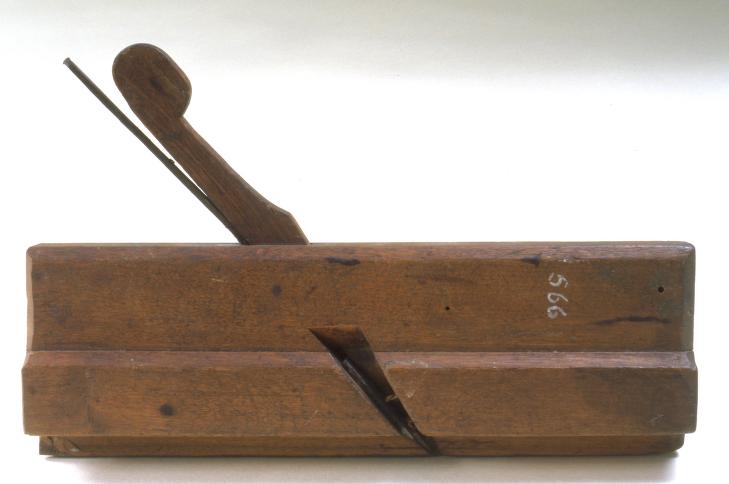
Woodworking was a highly specialized activity in the eighteenth and early nineteenth centuries. Carpenters, joiners and cabinetmakers used a variety of tools, such as this wood plane Chelor made in about 1770. This tool "planed," or shaved, a piece of wood to the proper thickness. To use a plane properly required talent and training. To make one required additional skill. The Nicholson family produced hundreds of planes. A son and Cesar made most of them, but evidence suggests that Francis Nicholson may have trained other plane makers as well. Chelor began putting his own name on the planes he made after gaining his freedom. His planes bear their maker's mark: "CE CHELOR LIVING IN WRENTHAM".
By the end of the eighteenth century, slavery was increasingly out of step with emerging beliefs about the nature of society and inalienable human rights. Cesar Chelor lived until 1784, long enough to witness the beginning of this fundamental transformation of American society.
top of page
|
Plane
| creator Cesar Chelor |
| date c. 1770 |
| location Massachusetts |
| length 9.5" |
| width 1.12" |
| process/materials wood, metal |
| item type Tools/Woodworking Tools & Equipment |
| accession # #1904.15.01 |
|





