Wait for each file to download, then click the arrow to play the audio.
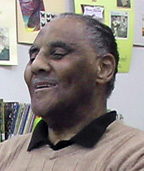
RE: Well, I was born in Cambridge February 18, 1924, and at that time, just before the
Depression...or no...yeah, prior to the Depression time, my dad worked in the post office and
my mom was a registered nurse. She was working in various hospitals. So we didn't really feel
the pressures of the Depression, because they were doing quite well. We grew up in a part of
the community that was mostly...predominantly white. There was only two or three black
families in the community area. And so I didn't have the advantage of being able to live in a
black community to, you know, to actually be able to feel the black culture or to grow up in
the black culture. And so I really wasn't accepted in the white community, and yet when I
tried to socialize in the black community, they felt that I wasn't, what they might say,
"black enough." I was not born in the "Hood," or in the black culture. So I wasn't accepted in
either one of the commun...uh...cultures, and so I had one foot in one culture and one foot in
another, and this was a very, very disturbing thing for me because of my...learning my
identity, who I was. Growing up, my dad never spoke about his experience in the first world
war. And so we never knew much about him until later on in my life.
NM: So he didn't talk a lot about...he had served in the war before you were born.
RE: Oh yeah, he served in the first world war, and he was in the 92nd Regiment which fought
in France under the French government. And that was a disturbing thing when I found out that
it was a time when no commander, American commander, white commander, wanted to be in command
of black troops. They felt that they weren't good warriors and not good fighters, so...the
French government took them under their command, and it was very exciting, the fact that his
regiment did co...they performed so meritoriously that the French government awarded them, the
regiment, the highest honor, medal of honor, the Croix de Guerre, which is the medal of war.
And I didn't know about the fact that also that my dad was part...well, actually they had
inherited the legacy of the Buffalo Soldiers. And I didn't discover this until I saw a picture
of him and on his shoulder patch was a picture of the Buffalo soldier, and I didn't discover
that until just recently. So he was a...the...92nd referred to the Buffalo soldiers also. When
he came back to this country, he and his buddies wanted to join the Veterans of Foreign Wars.
But they weren't welcomed that much, you know. It was a time when there was this racial
attitudes of separatism. And so, they made it difficult for them to be members, and so my dad
and another friend, they formed a first black Veterans of Foreign Wars post in Cambridge. That
was in, I forget the year. But anyhow, it was called the Isaac Wilson Taylor Post. It still
exists, and he was made...my dad was made first president of the Isaac Wilson Taylor Post. And
my mom, she was made the first president of the Ladies Auxiliary part of the post. So this was
very exciting, but it left a bitter taste in my mouth about the way the country had not
welcomed him with open arms back, when he came back from service, and so I always try to find
out more and more about what he went through. But I came to the the conclusion that perhaps
the reason he didn't speak about it is ?cause he...probably was suffering from what is very
common today with troops: post traumatic stress syndrome, ?cause he showed some signs of it,
?cause they experienced such severe war experience.
Interview Clip #2:
Ray describes the significance of the Buffalo Soldiers
RE: ...The significance of the Buffalo Soldiers was that...after the war, there was a
regiment that was the cavalry [pronounced "calvary" throughout the interview] that was formed,
a black cavalry, and this cavalry was assigned to the Midwest...western frontier, to fight in
the western frontier primarily in the Indian...American Indian Wars that were taking place.
And the Indians named them the Buffalo Soldiers because their hair was curly and
kink...similar to the coat of the buffalo. And the skin of the buffalo was brownish, similar
to that, and they were furious warriors, tremendously well–respected by the Native
Americans as being tremendous warriors, and that's why they named them the Buffalo Soldiers.
And then when the cavalry was dismounted, dismantled, the 920...the 92nd and 93rd were black,
all black segregated regiments in the army, and so they inherited the legacy of the Buffalo
Soldiers. So it was passed down to them.
Interview Clip #3:
Ray discusses the circumstances of his enlistment in the military
NM: Okay. Would you talk about the circumstances around which you came to join the service
and talk some about your service in World War II?
RE: Uh...yeah, that was uh...(pauses) let me think now...The reason why I joined was
because...I unwillingly joined, I should say, is because I was at Northeastern University at
the time of the uh...in...in '42, and I was gonna try to avoid the draft, because many of my
buddies felt, well theirs is a white man's warWhy don't you join up...uh...sign up for the Army? And I told'em I
wanted to join up for the ROTC. They said, "Oh, you can do that right here." And so I signed
up. Two weeks later I got a wire that I had to report to Fort Devens in two weeks or three
weeks. They had really fooled me into volunteering for the standing army, and I'll never
forget that. And that's when I began to lose my trust in...especially in people...Caucasians,
Caucasian people but...I began to lose ...trust, and then I realized that this...I could turn
this around and find some positive things from that experience, which I did in many ways. But
uh...that's how I became a unaware volunteer.
Interview Clip #4:
Ray discusses his service and the way in which black people were treated; story of his visit to Biloxi, Mississippi
NM: Are there any experiences that took place during your service that stand out to you
that you would like to talk about?
RE: Well, see, I didn't see...I was not in combat in any time during my service, in the
service. Most of the time I spent in this country, or a large part of it. And the thing that
really...ah...I still harbor in my thoughts is the way blacks were treated in
this...especially in this country before we went overseas, while in uniform. And these
experiences are the things that stay and one of the most profound experience I had was when I
was in Biloxi, Mississippi, and we were told that whenever you go in town, they teach you...go
together...two, not three, ?cause that's a crowd and can cause a problem. But go buddy system.
And I was a loner anyhow, and I went in by myself one time, and I drifted into the white
community. And when I realized I was in the white community, I panicked, because I had heard
when we got down there, that we...the protection for blacks was very limited....there...so
much injustice...so much trumped up charges that were not right or true against blacks. And
...they come back from being on pass... bandaged up and being beaten up for different reasons
that were not found...no foundation. And so I drifted into the white section. I panicked. I
started looking for a bus stop. I found a bus stop, and when I did, there were a lot of people
standing around waiting for a bus, and so I said, I'm not gonna stand there. I'm gonna stand
near the curb. So I went over near the curb. I stood there at the curb, and all of a sudden
this young...this old man came over and he looked me up...and he looked very, very serious and
he said to me, "Step down there," and he pointed to the gutter, and I had my uniform on, and
uh...I says, "Why did you tell me to step down there in the gutter?" And he says, "Where you
from, boy?" Well, as soon as he said "boy," I knew what was coming. That's a derogatory
expression towards blacks. And I said, "I'm from..." I was bold. I said, "I'm from God's
country." He said, "That's why I told you to step down there," and as he was yelling at me;
all these people that were around waiting for the bus, they came forward, and they started
surroun....almost surrounding me, you know, and he was raising his voice in anger and rage.
"What're you doing in this area? You're up to no good! You've been up to something. You've
done something! We're gonna get..." And so I started walking away and I was walking...they
start following me and as they...follow me, I started running...and as they're running, they
were running and call...shouting all kind of things that I had done, in that area. And all I
could think of was what it...I finally realized how it felt...finally felt how...black folks,
when they've been chased by a lynch mob, and that's what it felt like. How they must have been
so much in fear. And even though I'd heard about lynching and lynch mobs, only in that moment
that I experienced a situation that I could have been in danger, that I began to
recog...realize how much they had suffered...the blacks. And so that is why that experience
has stayed with me. Uh...I was lucky enough to run into the black community...we were told to
stay in black community and I was okay, but the thoughts of having...ready to die for this
country...you know...and a uniform on... and then, and others were ready to do harm to me,
just was a terrible experience. There were many like that, many experiences like that in the
South, going through the South.
Interview Clip #5:
Ray discusses being stationed in Hawaii and the racism he experienced there, especially while at a dance club
RE: The next experience that stays with my mind is that...when we were getting ready to go
overseas, you know, after all these bad...negative experiences we were having, we felt, well
gee, when we get to our next assignment it's going to be wonderful ?cause it's gonna be Hawaii
and we had dreams all our lives of Hawaii...people look like me and there we'd be accepted
with very little discrimination. And that was another moment I'll never forget, when we got
there the women were afraid of us. And, the reason why, we found out was because the sailors
that were post or based in Okinawa...not Okinawa...in Hawaii, they had poisoned their minds
with all kind of lies, stereotype stuff. Stuff like you got tails and they have tails...and
all kind...they smell bad...and all that...all kind of stuff, and the indigenous people
believed it. So we had to eventually let them know that this was not true. But just the fact
that these soldiers and sailors that we were going to be fighting together for peace around
the world were sending this racial attitude, racism around...and it just spread like wildfire
throughout the services. Everywhere we went, we found racism followed the flag, it seemed.
Interview Clip #6:
Ray discusses the "Double V" campaign and the segregated Army
NM: So I've heard of the "Double V." Would you talk about that?
RE: Yeah. One of the things, like I said, when we...we had to think of different ways so
that we could keep from being full of rage because we knew that that would be
counterproductive. And so, what we used to do is to have a symbol that kept us having a
vision. And the vision was a "Double V" victory sign. And every time we saw each other, we'd
give that. And that gave us courage and hope and patience, because what we decided was that we
had two wars to win. And once we fought against the...once we finished the war against the
Facists and then ...we would be home...we'll fight against racism. So the "Double Victory" was
gonna be when we got back to this country, we would fight for racism. Now what that did
was...against racism...that unified us! That brought us together with a common goal, a common
cause, so we became more focused on how we were going to fight racism when we got back. And
one of the big things we felt was we're gonna take advantage of the GI bill and get our
education. And that's the way we're gonna fight it when we get back. But that kept us from
being full of rage, especially, I know in the beginning we used to kid about...in the
segregated army, we had white officers in charge of us, commanding us. Now the white officers
generally were the what we used to refer to as the ninety–day wonders, you know, three
months of training and they become officers. And many of them were not the best qualified
officers because a lot of them were young and inexperienced and whatever. But we used to kid
about how we'd get into combat, we were gonna...actually...take care of them and get revenge
against them. And so, you know, we had it...we had to get those kind of thoughts out of our
mind. And that's why Double Victory "V" sign helped us to focus on what we could do when we
got back.
Interview Clip #7:
Ray talks about getting out of the service, the GI Bill, applying to college, and the racism that he experienced; he speaks of h
NM: What happened when you got out of the service? How long did you stay in and what did
you do after?
RE: I was in the service for over three years, three–and–a–half years,
something like that. And when I got back the first thing I wanted to do was take advantage of
the GI bill, so I applied for Harvard University. They told me that I had good marks at
Northeastern before the war and I...and they said I would be hitting my head against a brick
wall. They couldn't accept me because I would be hitting my head against a brick wall and they
advised me not to apply...'cause I wouldn't be accepted just on the basis of stereotype, that
they felt blacks didn't have the capacity or intelligence to...and so I applied for McGill
University and I was accepted without having to even take an entrance exam.
Two different times I became in charge of a chemical laboratory. I had majored in chemistry
and the first laboratory that I was in charge of was quality control for making batteries, dry
cell batteries. So I to keep the liquids at a certain level, and that was quality control of
the materials that were going into the battery. Shortly after that I went into a tracer
laboratory which was...I was in charge of a very small laboratory and we had to monitor the
radiation fallout around different parts of the world. They'd send us samples of air samples,
vegetation...to our lab and we would break it down and count the radioactivity fallout, mainly
to monitor...since there was a moratorium on the testing of atomic bombs after Hiroshima,
mainly to determine whether other countries around the world were testing atomic bombs. And so
I did that for ten years.
Interview Clip #8:
Ray discusses an encounter with Malcolm X in the 1960s
NM: Would you talk about Malcolm X?
RE: Yeah. when I came back from service, actually I was involved in the NACP [sic] quite actively. I was in charge of youth groups and training them to, be able ...to...how they could be effective in...during sit–ins and boycotts and that type of thing because many of the stores, Woolworth and many others, were, de....what they called...were uh...it was a ...a form of segregation which was not openly done. [Ray is referring to de facto segreagation.]
NM: What year are we talking about?
RE: This was in the fifties...well, I got out...let's see...I got back in the fifties...in the early fifties. In the early fifties. So I was training them, and then in the sixties, what happened was that Malcolm X was visiting Boston [something here that is very hard to understand: 00:26:20] on Bull Hill Ave. in Boston and his mosque was in New York, but he was visiting. I heard about this and I...I felt that I should try to go there and talk about more peaceful resistance than what they were doing, because they were very militant, and they were talking a lot of hatred and rage against Caucasian people. And so I went to the mosque and when I went in, they sit all the visitors up in front at the time, and I was...and Malcolm started preaching and he was very charismatic and everything and as he was preaching, he sent...he called his daughter, a little...his daughter was about six years old or so...he called her up to the stage. He called her up to the stage and then he showed her a picture of Marilyn Monroe, who was a movie star at the time. And he asked her, he said "Who is this?" and she said, "Daddy, that's the devil. That's the devil, Daddy." And so he'd been...he'd been teaching his child to hate. And that made me even more furious. And so then he said to everyone, he said to the guests that were there, a lot of young people, too, he said, uh...if you're not with me, then you're against me...or something like that. He said, now if you wanna join the movement, he said then come forward. And some of the young folks got up and they started to go forward. And then I jumped up and I said, "How can you ask your brothers and sisters to sign up for something they know nothing about and that they may not be in agreement with?"
RE: And he said, they'll learn once they join, then they come to meetings and then we'll teach them about this after they become members. And then at that moment, they have what they call the Black Guard...these are the members that are men...that line the walls and watch very closely...body guards... I called'em...and they (slight chuckle) beckoned me to come come from the seat and finally I did. They took me out not the front door, the back door and they told me, they said they're going to let me go this time. But they said, don't ever challenge Malcolm X publicly, or any time. And uh...they said, ?cause we would give you a lesson that you'll never forget, or something like that. And I'll never forget that... and so that started me in trying to form groups for non–violent resistance, and fight any kind of racial hatred against whites or whatever.
Interview Clip #9:
Ray recalls the death of John F. Kennedy
NM: Do you remember what you were doing when John Kennedy was assassinated...how that affected you? I'm going to ask you about a few different people...what you were doing, how it affected you.
RE: Well...I don't remember exactly, but I know it put fear in me. Uh...for all... all of the activists... and fear that this country was going to be experience [sic] a racial revolution, because people were talking about, we need a revolution, and so, it was fear. I had fear, and especially, I had lost hope because Malcolm...uh...I know when Malcolm had changed and become more Orthodox and I thought there was a chance for changing the attitudes of the...black Muslims of this country...the nation of Islam, to become more positive in their attitudes, and less revolutionary, and so... my feelings were of hopelessness of... resolving the racial problem, at the time.
Interview Clip #10:
Ray recalls the Civil Rights Act of 1964 and looking for spiritual solutions to the problems people faced in our country
NM: Do you remember when the Civil Rights Act was passed? Do you have any recollection about that?
RE: Ah...you mean in sixty–four?
NM: Mm hmm.
RE: Yeah...uh...um...I don't...Many things are blocked out my mind about the struggle because I saw no real solutions in enforcement of legislations to be changing the hearts and minds of man. And so it might have changed outwardly their actions, but their hearts weren't changed. And so I saw...I began to work towards trying to, um... reflect on spiritual solutions to the problems that this country was facing, to change the hearts of man. And so, um...a lot of my energies were focused from that time on keep talking more about the new spiritual rev...uh...knowledge that had been revealed in the new faith that I had found in the Bahá'í teachings of the oneness of the human family, and the talking of the solutions uh...social and economic. I went away from focusing on the issues of the day, and more on focusing on talking about the coming together of...uh...all the different religions and people of this world. So, so that's why I...my thoughts were not focused on, legislation changes.
Interview Clip #11:
Ray recalls the death of Martin Luther King, Jr.
RE: When Martin Luther King died, uh...well...that's later on in sixties...um...I don't...
NM: Sixty–eight...
RE: Yeah...yeah, in late sixties...um...I don't remember...uh...I probably put things out of my mind that... were not of ...positive, at the time, and I didn't dwell on what the result or the consequences would be, I don't think I did. I think I just, I just, we just were, we just mourned his passing, and the loss of a great warrior. Uh... primarily because he was trying to reach the higher values of this country on non–resistance, uh and...peaceful non–resistance, and uh...and the country didn't seem like it was hearing it. But, um...I don't remember, to tell you the truth. I don't remember.
Interview Clip #12:
Ray speaks of his mother as his hero
NM: ...'kay...Ray, I want to ask you who, either nationally or in your own life...who had a great influence on you as a person?
RE: As a person...um...hmm...there were so many. Um...gee, I can't think of any one person that stands out, outside of my mother. Um...no, I can't think of anybody off hand.
NM: What about your mother?
RE: Well you see, my mother...I didn't know, but since 1930, I think in thirty–two or so, she... started a nursing...rest home, a nursing home. And she used to take people in that couldn't afford to go to white nursing homes. And she only charged them what the state would pay the poor people, which was very minimum. And, and I remember how she used to help the neighbors when they had illness or sickness. She would go to the different...they'd call her and ask her to come over...so–and–so is ill, and she wouldn't charge them. She serviced the whole community in many different ways, and I was too young to appreciate it. And she still had that nursing home for many years. But, she taught me of caring for people, how important it was to love another human being. And therefore, to me, that's the most important thing that I...anyone can learn...is have compassion and love for another human being, and she demonstrated it. So, to me, she's my hero.
Interview Clip #13:
Ray talks about trying to get into flight school and about his "Charlie", Charles Cross of the Tuskegee Airmen
NM: Ray, you brought this picture here. We can take a photograph of it. Do you want to talk about this? [reference to Ray's picture of "My Charlie"]
RE: Yeah... when I was in the service, when I enlisted...Generally, if you had an IQ of 110 or more, you were able to select what service you wanted to go in, and I, at the time, wanted to go into become a fighter pilot. And so I applied, and I was accepted into pre–cadet fighter training. And what happened was that periodically, the psychologists and psychiatrists would interview us, every week or something, whatever it was, while we were in pre–cadet training. And one time they called me in and they asked me if I ever fainted in my life. I said, oh sure, that's nothing. I says, three times. They says, how come you didn't tell us? I said because they were unusual circumstances,/em>...it was unusual. And I explained what they were, you know, fainting in a theater when the temperature was extremely high, standing up in the theater, and getting hit in the head with a stick, and seeing the blood come down and...sight of blood...faint. Things like that. And they said, well, don't you think it's an unusual circumstance to be a hundred miles...a mile up in the air in a million dollar plane and faint? And on that basis they washed me out. Well, I found out later that many people were washed out because they were trying...the program was designed to fail from the beginning, from what everyone had said, because they found all kind of ways of washing people out. The Army just did not believe that blacks could become uh...they had the capa...the coordination, capacity, and the intelligence, and the courage to be good fighter pilots. And so that attitude was always there. And the training was with white officers, so, I washed out. Well, when I told the story, it was in the paper, Charles Cross, who was a Tuskegee Airman who lives in Springfield, Massachusetts ...he called me up, and he told me...he said, Ray, I relate to your experience. He says, I'd like to come by and see you. And he came by, and he gave me a poster of himself and his plane, and we had a good conversation about our common experiences. And...although he made it and I didn't. And Charlie became a good friend, and what he does to give back to this country, which really was, I think is just amazing, he has set up at Westover Field, an office, where he has simulated equipment for flight equipment, and he trains anyone who wishes to, young people especially, any young people who wish to learn how to fly on simulated equipment, he trains them free of charge. He's still doing this. He's been doing it for years. And he said that if they want to go further and get their license for Civil Defense career or something, that he would subsidize the cost of it. And so, just talking to him the other day and I said, you're still doing...and he says, yep. And he's still flying, too. [chuckles] He's 'bout my age. But, he does this, and he does other things to help educate people, young people that are interested in flying. And so, Charlie gave me the inspiration to continue to tell my story, or to try to learn more and more on how to become a story teller, uh...So that's my Charlie.
Interview Clip #14:
Ray talks about his opinion of the single most important event in American history
NM: Ray, in your opinion, what do you think of as the single most important event of the 20th century?
RE: Single most important thing ...hmm... I think that...important...one of the important things is happening is that the institutions, all of our institutions are now being...light is being shone on all of the institutions that are important, the justice, the marriage institutions, all the institutions, the government institutions...all these institutions are now being challenged to rise to a higher level. And I think the old order is being shaken up, and I think that is important to bring to the surface, the problems we have to deal with, and to come together as one people, so I think there is a movement towards that, that people are beginning to recognize that the oneness of the human family that... and I think this is the big thing in this century, is to recognize that we are...that we're all connected in some way, as one human family, rather than different races, focusing on different groups and races and things, and I think that is...is happening.
Interview Clip #15:
Ray reflects on what we might have forgotten -- seeming like interview will wind up here
NM: Is there anything you would like to add or make sure we get recorded, included?
RE: Oh, there's so much that I missed...I've forgotten to mention that...so much that I wanted to share, but it's....reflecting back on things is difficult, especially when you've been training yourself to look forward, rather than backward, in all different ways of life. So, I can't think of...of anything off hand
Interview Clip #16:
Lee asks Ray to talk about his experiences in the South Pacific, and of the experience of having white officers in charge of bla
LH: Can you talk a little bit about your time in the South Pacific?
RE: Well, my job in the South Pacific was to survey in preparation for laying air strips in the different islands in the Pacific. And so, we did this with instruments, and then when there was just bush area, we did it with what they call a table survey. We just have a table, we use a straight edge to...to [can't make out the word] with, and we'd make maps of the area, to prepare for troops advancement or laying airstrips. So we did this, and the experiences we...then they used our group, our regiment was also used for all kind of war type operations such as in the Quonset huts...they used to store dynamite, because in order to build airstrips, they had to dynamite out stumps of trees and things like that, and different areas, and land...movement of land. And what they had us doing, which was scary, every so often, after a few months, the dynamite had to be turned over, because it was settled. And then...we'd have to go into these Quonset huts and hold our breath that every time we turned the box over, that it was not unstable. That was scary. Things like that we had to do ...we had to ...let's see what...many other things... then, whenever there was...we were fired on quite a bit, from the hillsides, especially in Okinawa ...because the Japanese had dug into the hillsides and built small little villages into the mountainsides and o the hills. And they had done this prior to the war, and so they had large storages of food and everything. And at night, they would fire on our encampments from a distance... from these hills and caves, and what we would do is just call the Marines to go in and they would go up to the hill...to the caves, and they would fire flame shooters into the caves and smoke'em out. That was the closest I ever got to being...having fire...gunfire in our direction. When we were in Okinawa, we went...well, before we got to Okinawa, we were hop skipping from one island to another, building airstrips and then move to the next one. We finally go to Okinawa...it was just before they had...dropped the...the A...atomic bomb, and, after they dropped the atomic bomb, they dropped the atomic bomb...just before they dropped the atomic bomb, we were being prepared to invade the mainland of Japan. So they got us all prepared, ready to invade the mainland. So we were used as foot troops to fire ...along with the infantry as well, as in building the airstrips. So, just before...and so that was one time that I was very relieved that we didn't have to kill another human being, you know ...if we had invaded the island, the main island, we would've been...there would've been a lot of casualties. And so that one of the things that I thank the heavens for is that I never had to kill another human being. In the islands, also, we used to have to do training, when we weren't surveying a strip. I was in headquarters company, so we didn't do much training, but the other companies, A, B, ad C, other parts of the regiment, they would have to figure out how much dynamite would take the...to create...a crevice...a hole–size hole...or to move a certain amount of earth...how much dynamite they needed. I know one other, one company, which was about a hundred and ten men, they were practicing, and they had one of these young officers, one young officer, he was a ninety–day wonder and he'd only had three years...three months of training as an officer, and he commanded...he was in command at the time...and they put in forty pounds of dynamite in the hole, and...they went back...they lit it and they went back, and they waited. Now, the book says you wait a certain period of time, and you have other precautions you take before you go advance. He ignored all of the precautions that were supposed to be taken. He called the man to go forward to explore why it didn't go off, and when he got right on top of it, it went off. And I remember, the reports coming back to headquarters, ?cause I was in headquarters...they said there were many parts that... body parts everywhere. And all because of this young officer, white officer, who was inexperienced...that didn't take...follow orders properly. What was so typical of so many of the white officers we had...some of them were from the south, and during different....uh times I...different places I was at...and uh...they...w....we...I think we felt they were deliberately assigned to black troops by the government, because they felt...we think that...southern white officers knew how to handle black folks. They knew how to put'em in their place, they knew how to beat'em down, and...have control over them... better than northern officers who'd be too compassionate or too just in their ways, or something. And...this played out in many cases ...the officers were not properly trained. And that was another thing that really was a bitter experience to have, when you're fighting for this country. And so...I think that the movement...I think that the movement for social justice, I think, started in the Army because that's when we said, "No more"...take no more. And they...we became united...and then working towards fighting injustice.
Interview Clip #17:
Ray talks about his hopes for the development of his story and how telling his story has helped him; discusses how it wasn?t rea
RE: ...One of the things that I hope that I'll be able to develop in telling my story, is to include many experiences that I...some of the things I learned about how to prepare myself for obstacles that I might face in life, and others might face in life...that they could learn...benefit from my experiences...and so all of these negative experiences I've talked about...about the disrespect for another human being, and the way we're treated...there were positive lessons I learned from that. There were certain qualities that I began to develop... compassion for another human being...other things...because I see what...felt like to be...suffer certain things that...it showed me many different examples that I hope someday I'll be able to develop my story to show all the positive things that came out of all of these negative experiences that I experienced. And... one of the things that I realized, too, I think, was the government really, was not really at fault for discriminating, having a discriminated army, in a sense. They had no real choice, I felt, because otherwise there'd be no unity in the fighting forces. There'd be if they went against Jim Crow practices in the south, or went against southern positions, southern positions that...[garbled]...they had to have unity, and so the only way was to separate the forces to prevent riots and things like that. And so, that's one thing I like to tell people, too, that...don't hold any bitterness against the government, because some people still do. Even though Truman passed the...in forty–eight...the...desegregated the army...there were still those feelings. And so that's my goal, is to put a positive spin on all negative things that I've experienced.